

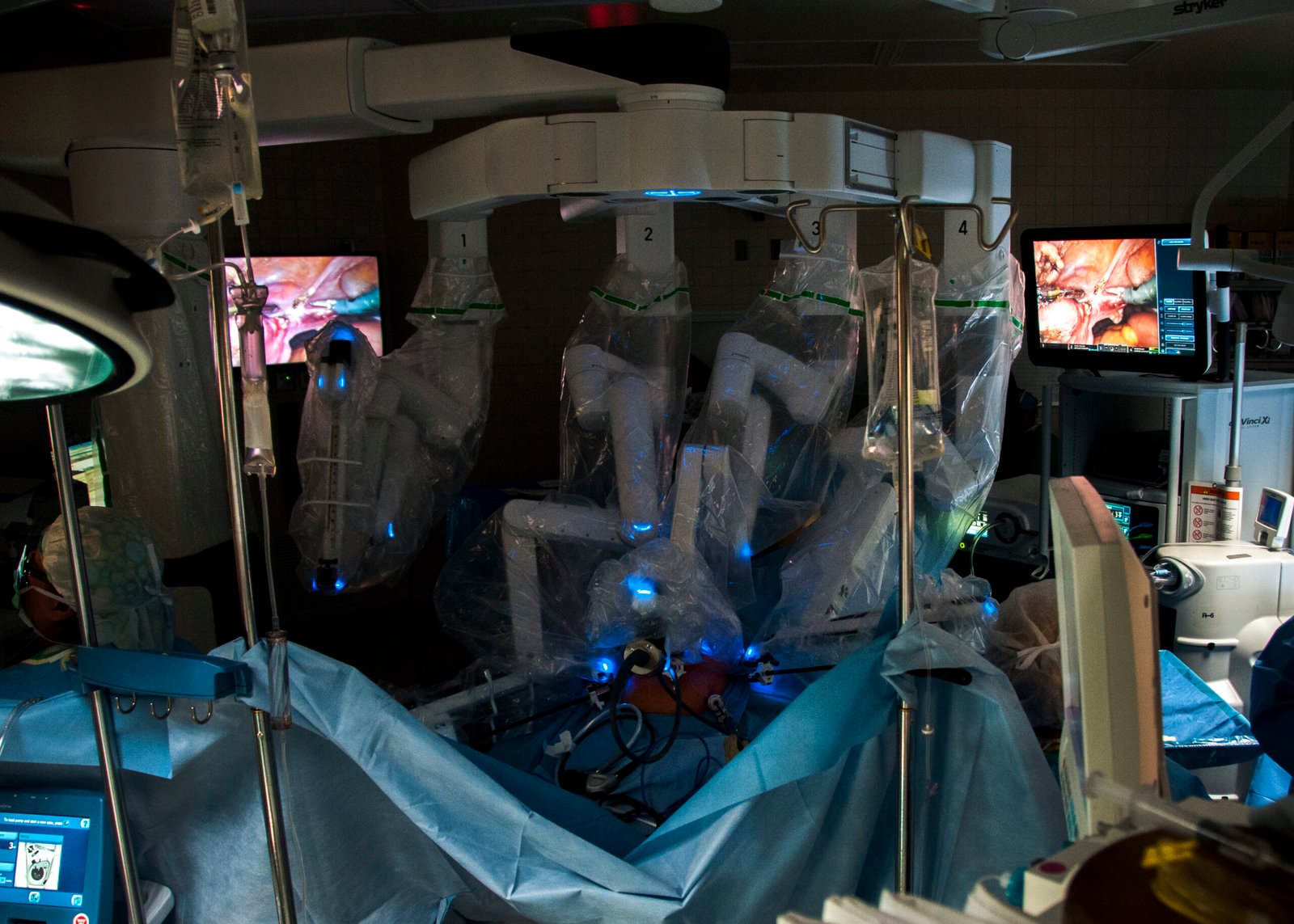
Medtronic announced Wednesday that the U.S. Food and Drug Administration has cleared its LigaSure RAS Maryland jaw device for use with the company’s Hugo robotic-assisted surgery system, bringing a two-decade-old vessel-sealing technology into a fully robotic workflow in the U.S. for the first time. The clearance expands the instrument options available to surgeons operating the Hugo system and extends Medtronic’s established energy platform into the increasingly competitive robotic surgery market.
What the LigaSure RAS Maryland Instrument Does
The LigaSure RAS Maryland is designed to seal and cut vessels, thick tissue, and lymphatic tissue up to and including 7 millimeters in diameter, sealing vessels in approximately two seconds while minimizing thermal spread to surrounding tissue. It’s built to work exclusively with Medtronic’s Valleylab FT10 energy platform on the Hugo RAS system, pairing that generator’s sealing technology with the robotic platform’s range of motion and control.
Medtronic describes it as the first-ever robotically driven LigaSure instrument, a notable distinction given how long the underlying LigaSure technology has been in clinical use. According to the company, LigaSure vessel-sealing technology has been used in more than 45 million procedures across more than 65 countries over the past two decades, almost entirely in open and laparoscopic surgery until now.
A Track Record Two Decades in the Making
“Vessel sealing sits at the center of how surgeons work through the most demanding moments of a procedure.”
— Dr. Matthew Kroh, Chief Medical Officer, Medtronic Surgical
That established track record is central to how Medtronic is positioning the new instrument. Kroh, a practicing surgeon, added that surgeons have trusted LigaSure to perform that role across open and laparoscopic surgery for decades, and that bringing the same performance to Hugo lets surgeons carry the confidence they already rely on into robotic-assisted cases.
The instrument isn’t entirely new globally. It was first introduced on the Hugo RAS system in Europe in 2025 following CE Mark approval there, meaning European surgeons have already had roughly a year of clinical experience with the robotic version of the device before its U.S. clearance this week.
The Hugo RAS System’s Path to the U.S. Market
Medtronic’s Hugo RAS system itself is a relatively recent entrant to the U.S. market. The FDA cleared Hugo for adult minimally invasive urologic surgical procedures in December 2025, and Medtronic announced the system’s U.S. commercial launch the following February. Since then, the company says Hugo has moved into commercial use at a growing number of health systems and hospitals across the country, though it remains cleared in the U.S. specifically for urologic procedures for now.
Internationally, adoption has moved further and faster. Medtronic says the Hugo RAS system has been used with tens of thousands of patients across more than 35 countries, spanning more than 50 different surgical procedures across urology, general surgery, and gynecology, a considerably broader footprint than the system currently has domestically.
Beyond Urology: Medtronic’s Broader Ambitions for Hugo
That gap between Hugo’s international and U.S. indications is a gap Medtronic is actively working to close. In a June 3, 2026 announcement, the company said it had submitted 510(k) filings to the FDA seeking clearance to expand Hugo’s use into general surgery in the U.S., and the company has said it plans to continue pursuing expanded indications across a broader range of soft-tissue surgical procedures, including gynecology, going forward.
Each new instrument clearance, like this week’s LigaSure approval, and each new procedural indication effectively widens the pool of surgeons and hospitals who might consider adopting the platform, since a robotic system’s commercial viability depends heavily on how many different procedure types it can support with instruments surgeons already trust.
Why This Matters in a Crowded Robotic Surgery Market
The clearance arrives at a moment industry observers describe as the most competitive period yet in surgical robotics, with several large medical technology companies now vying for share specifically in the soft-tissue segment of the market. Medtronic’s strategy with Hugo has leaned heavily on offering surgeons continuity: the same energy instruments and vessel-sealing performance they already rely on in open and laparoscopic settings, now available within a robotic workflow, rather than asking surgeons to learn an entirely new instrument ecosystem alongside a new robotic platform.
That continuity argument matters in a market where switching costs, both financial and in surgeon retraining time, can meaningfully slow hospital adoption of a new robotic system. By extending an instrument with 45 million procedures of clinical history onto Hugo, Medtronic is betting that familiarity will lower the barrier for surgeons already comfortable with LigaSure to consider robotic-assisted cases they might otherwise have kept in open or laparoscopic settings.
What Comes Next
For now, the LigaSure RAS Maryland’s U.S. availability is limited to the urologic procedures Hugo is currently cleared for domestically. Whether Medtronic’s pending general surgery filings succeed, and how quickly hospitals expand their use of Hugo beyond urology, will likely determine how much this week’s instrument clearance translates into broader clinical volume, rather than simply adding one more capability to a platform still working to establish itself against more established competitors in the U.S. robotic surgery market.
[…] amid a broader wave of activity in India’s robotic surgery market. It follows closely behind Medtronic’s recent FDA clearance for its own LigaSure RAS Maryland instrument on the Hugo robo… in the U.S. market, part of a broader global trend of established medical device makers racing to […]