

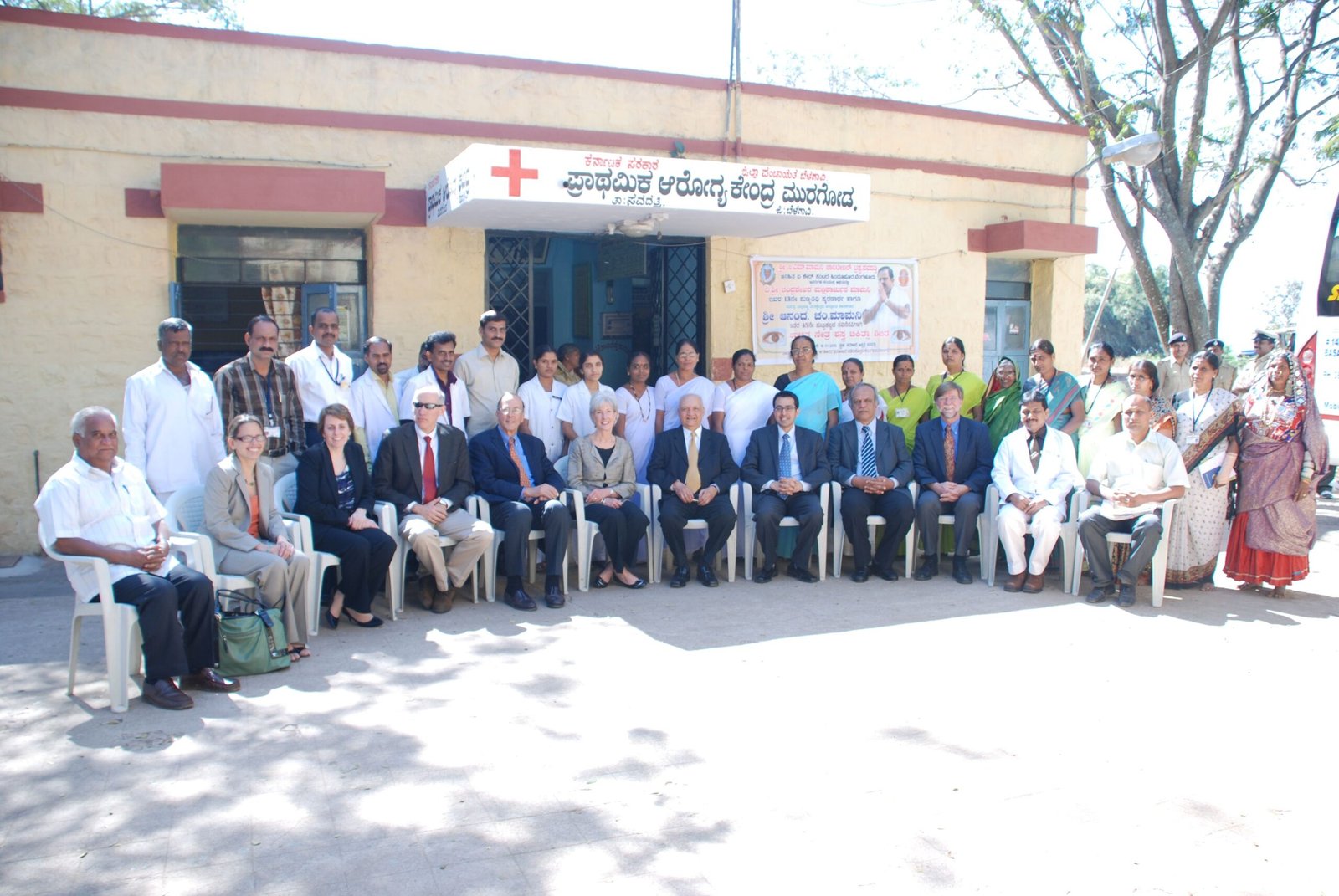
iKure Techsoft Private Limited has secured USD 1.8 million in Pre-Series A funding from four globally respected healthcare, foundation, and strategic investors: Philips Foundation, World Diabetes Foundation, Bayer Foundation (facilitated through We Share Forward), and Prourgn LLC of Japan. The Kolkata-based health-tech company said each investor reached its decision independently after evaluating iKure’s delivery model, technology platform, and ability to execute at scale.
The participation of four internationally recognized organizations spanning healthcare, philanthropy, and strategic investment signals growing confidence in scalable, technology-enabled primary healthcare models built in India. The round arrives as global health funders increasingly look toward homegrown delivery models capable of reaching populations that conventional hospital infrastructure struggles to serve.
What iKure Does
Founded in 2010 by Sujay Santra, iKure operates a hub-and-spoke primary healthcare model built around community health workers, clinics, pharmacies, diagnostics, and telemedicine, all connected through a digital platform called WHIMS. The system helps field health workers and clinical teams record patient information, track follow-ups, and manage care over time rather than treating each visit as a standalone event.
That continuity matters most for conditions that require ongoing management rather than a single consultation. A patient diagnosed with high blood pressure, for example, typically needs repeat check-ins, medication reminders, and follow-up support rather than a one-time prescription. iKure’s model is built to keep such patients connected to local health workers and medical services over the long term.
According to the company, it now operates across 11 states, reaches more than 7,900 villages, and has recorded over 4.5 million patient interactions to date. These figures are company-reported.
iKure has grown steadily since its founding, evolving from a small pilot project into what the company describes as one of India’s more established technology-enabled primary healthcare networks. Its path has been documented in academic case studies on rural healthcare delivery, and the company has previously been recognized by global health innovation programs for its community-based, hub-and-spoke approach to closing India’s rural care gap.
How the Funding Will Be Deployed
The new capital will put more health workers on the ground and expand iKure’s network of healthcare hubs, clinics, pharmacies, and diagnostic capacity across underserved regions. A significant share is earmarked for WHIMS itself, including new AI-enabled clinical decision support designed to give field workers earlier warning of patient risk and give clinical teams sharper tools for managing larger patient populations.
Remote patient monitoring and workforce development round out the plan, both extensions of the same underlying idea already built into iKure’s model: care that stays with people over time instead of resetting after every visit. Company leadership has been clear that the funding is intended to deepen iKure’s existing healthcare infrastructure rather than open an unrelated line of business.
Healthcare expansion of this kind requires more than better software. Reaching underserved areas means training and deploying health workers, building physical hubs and clinics, maintaining diagnostic facilities and pharmacy support, and running systems that hold up reliably across very different local conditions, from flood-prone coastal regions to landlocked terrain with limited infrastructure.
Why Global Investors Are Backing an Indian Primary Care Model
The four backers each bring a different form of validation. Philips Foundation and Bayer Foundation, through its We Share Forward initiative, represent healthcare and pharmaceutical industry expertise; the World Diabetes Foundation brings deep experience funding diabetes prevention and care programs across low- and middle-income countries; and Prourgn LLC represents strategic investment interest from Japan. Their shared decision to back iKure independently, rather than as a single coordinated round, is itself notable; it suggests the company’s model held up under separate due-diligence processes built around different priorities, from clinical outcomes to long-term financial sustainability.
For patients, the practical value is straightforward: healthcare that stays connected after the first check-up rather than ending at the clinic door. For iKure, the next stage is about scaling carefully while keeping local trust and community relationships at the center of the model, even as it moves toward deeper engagement with state health systems and national health planning.
A Broader Shift Toward Continuous Primary Care
India has made real progress expanding access to basic screenings and consultations over the past decade, aided by government programs and a growing private health-tech sector. The harder problem has been ensuring that people receive continuous care after that first interaction, particularly for chronic and non-communicable diseases that require ongoing management rather than a single intervention.
iKure’s approach, pairing community health workers who know their communities with digital records that carry forward from one visit to the next, is built to help close that gap. Its emergence also reflects a broader pattern: global health-focused organizations are increasingly backing technology that supports real-world healthcare delivery on the ground, rather than funding purely app-based or online-consultation models aimed at urban smartphone users.
iKure operates in a competitive rural health-tech landscape that includes players such as Karma Healthcare, which has built nurse-assisted telemedicine clinics across rural and semi-urban regions. iKure’s model is broader in scope, combining local health workers, physical care hubs, digital patient records, diagnostics, and structured follow-up systems rather than telemedicine alone. Its central challenge going forward will be maintaining consistent service quality while expanding into new states and communities.
Outlook
This Pre-Series A round positions iKure for its next phase of growth, moving the company from strong regional coverage toward deeper engagement with state health systems and national health planning bodies. The model’s core approach is designed to extend beyond India over time, though the company’s immediate priority remains scaling its healthcare infrastructure within the country.
As more capital and clinical data flow into technology-enabled primary care models like iKure’s, the round may offer a useful signal for how global health funders are starting to evaluate homegrown, delivery-first approaches to closing India’s rural healthcare gap, an approach the World Health Organization has long identified as central to achieving universal health coverage.
[…] CDC Warns What Is Mounjaro? And Does It Work Better for Weight Loss Than Ozempic and Wegovy? Global Healthcare Leaders Back iKure’s USD 1.8 Million Pre-Series A to Scale Technology-Enabl… Philips Partners With CENT to Advance Preventive Diagnostics and Early Risk Detection in India […]
[…] CDC Warns What Is Mounjaro? And Does It Work Better for Weight Loss Than Ozempic and Wegovy? Global Healthcare Leaders Back iKure’s USD 1.8 Million Pre-Series A to Scale Technology-Enabl… Philips Partners With CENT to Advance Preventive Diagnostics and Early Risk Detection in […]
[…] in rural and underserved regions, a challenge not unlike the one facing broader efforts to expand technology-enabled primary healthcare access in countries such as […]