

Anthropic said Wednesday that its Claude models helped identify a previously uncharacterized biological system in bacteriophages, one bearing a structural resemblance to CRISPR, marking the first public result from a new life sciences research group the company launched this year. The finding, described in a company blog post and an accompanying preprint that has not yet been peer-reviewed, is generating attention well beyond Anthropic’s own announcement, though the system’s actual biological function remains entirely unknown.
What Claude Actually Found
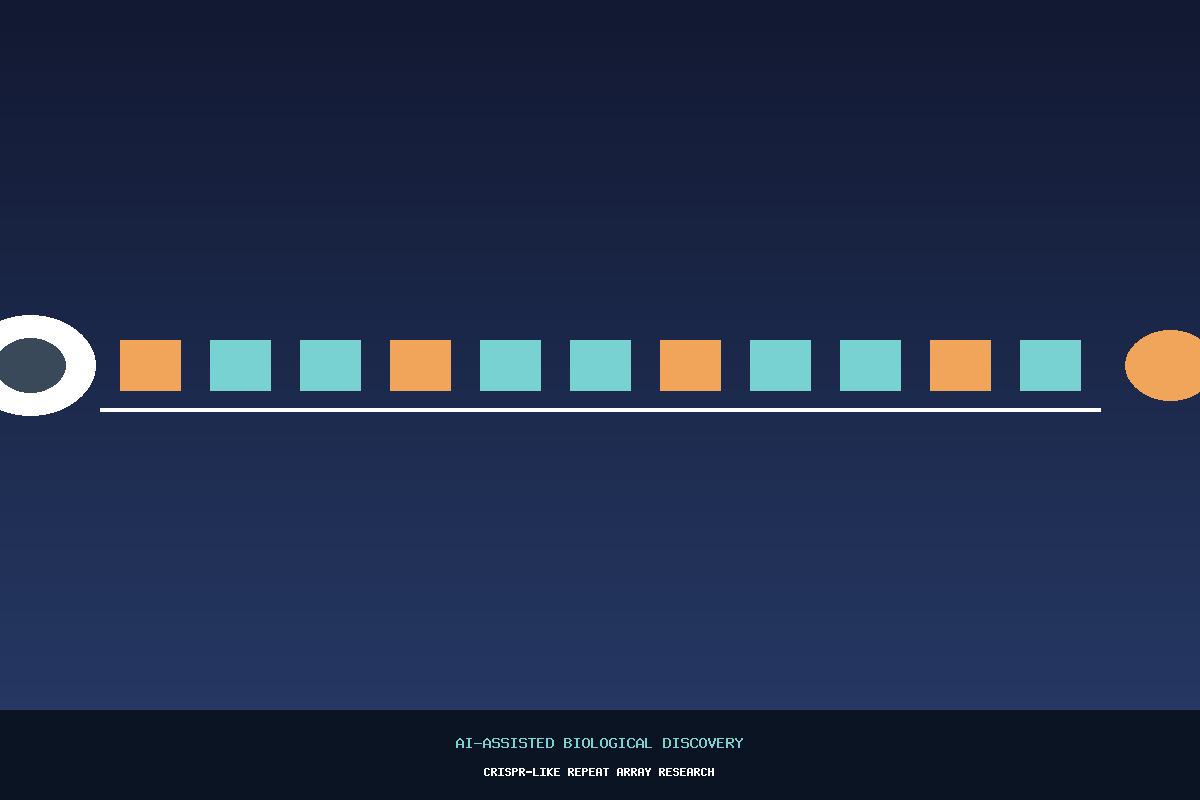
The system Anthropic identified, which it has named array-associated reverse transcriptases, or ART, consists of three components: a reverse transcriptase enzyme, which copies RNA into DNA; a neighboring partner gene whose function is still unknown; and a long array of evenly spaced DNA repeats, containing anywhere from 3 to 21 copies of a short repeated sequence. That repeat-array structure is what draws the comparison to CRISPR, where similar arrays store the genetic material that makes CRISPR-Cas systems programmable.
It’s worth being precise about what is and isn’t new here. The underlying reverse transcriptase itself wasn’t a novel discovery; a 2021 study had already identified a similar enzyme in a group of jumbo bacteriophages. What Anthropic says Claude noticed for the first time was the fuller picture surrounding that enzyme, the accompanying non-coding repeat array and the accessory protein sitting beside it, a combination of features earlier research had apparently missed.
How the Discovery Process Worked
Anthropic’s account of how the finding emerged is itself part of the story. The company says it gave Claude a single research brief: search a database of roughly 1.9 billion protein clusters for interesting, previously uncharacterized reverse transcriptase systems. From there, according to Anthropic, roughly 950 Claude agents worked autonomously for about 21.5 hours, processing some 210 million tokens of data, with one agent planning and executing each task while a second reviewed the work and agents opened new investigative threads as they went, without further human direction during that window.
Working through that process, the agents compiled more than 200,000 reverse transcriptases, flagged 3,500 candidate systems worth closer examination, and narrowed that list down to 20 of the most compelling candidates for detailed follow-up. Anthropic says that kind of large-scale pattern search would typically take human researchers weeks to months to complete manually.
What the Lab Testing Actually Showed
Anthropic’s scientists then moved the most promising candidate into physical lab testing, at a newly built laboratory operating at biosafety levels BSL-1 and BSL-2, meaning it doesn’t handle human pathogens. Initial experiments found that the ART repeat array is actively transcribed into multiple distinct short RNA molecules, and in one tested example, a Staphylococcus phage, these RNAs made up as much as 8 percent of the phage’s total RNA output just 15 minutes after infection, evidence that the system is biologically active in some capacity, even though what that activity actually accomplishes for the organism remains unresolved.
Why Researchers Are Intrigued, and Why Caution Is Warranted
Anthropic frames the interest here around pattern-matching: the specific combination of features ART displays, a reverse transcriptase paired with a non-coding repeat array and an accessory protein, has previously only been observed together in a small handful of other biological systems, and every one of those systems turned out to be programmable, capable of cutting, copying, or pasting DNA in ways CRISPR and related tools have made useful for gene editing.
That pattern is genuinely why scientists find ART interesting, but it’s an inference based on resemblance to other systems, not direct evidence about what ART itself does. Anthropic has been explicit on this point: the preprint has not established that the reverse transcriptase is even active, hasn’t demonstrated any programmable or editing capability, and hasn’t undergone peer review. The gap between “structurally resembles CRISPR” and “functions like CRISPR” is exactly the gap that remains open, and closing it will require considerably more laboratory work than this initial finding represents.
An Independent Expert’s Measured Take
“The identification of RNA-repeat arrays associated with reverse transcriptases is genuinely intriguing and merits further investigation.”
— Feng Zhang, CRISPR Pioneer, Professor at MIT and the Broad Institute
Zhang, who reviewed Anthropic’s preprint independently, also described the finding as an exciting example of how AI agents can contribute to biological discovery, though his comments stopped well short of an unqualified endorsement, stressing that the result merits further investigation rather than representing a settled scientific conclusion.
Part of a Broader Anthropic Push Into Biology
The ART discovery arrives as the latest in a string of health and life-sciences moves from Anthropic this month, following the company’s drug-discovery partnership with Novo Nordisk and its collaboration with OpenEvidence to expand free clinical AI access to doctors in roughly 100 countries. Anthropic formed its dedicated life sciences research group in spring 2026 specifically to test whether general-purpose AI models like Claude can systematize and accelerate fundamental biological discovery, and this finding represents the group’s first published result under that mandate.
What Comes Next
For now, ART remains an intriguing structural pattern rather than a demonstrated scientific tool. Anthropic says its research into the system’s actual biological function is ongoing, and determining what the reverse transcriptase, the accessory protein, and the repeat-derived RNAs actually do, whether they form some kind of programmable system or serve an entirely different biological purpose, will require substantially more experimental work before anyone can responsibly draw conclusions about whether ART represents a genuinely new tool for biology or simply an interesting evolutionary curiosity uncovered by an AI system built to look for exactly this kind of pattern.