

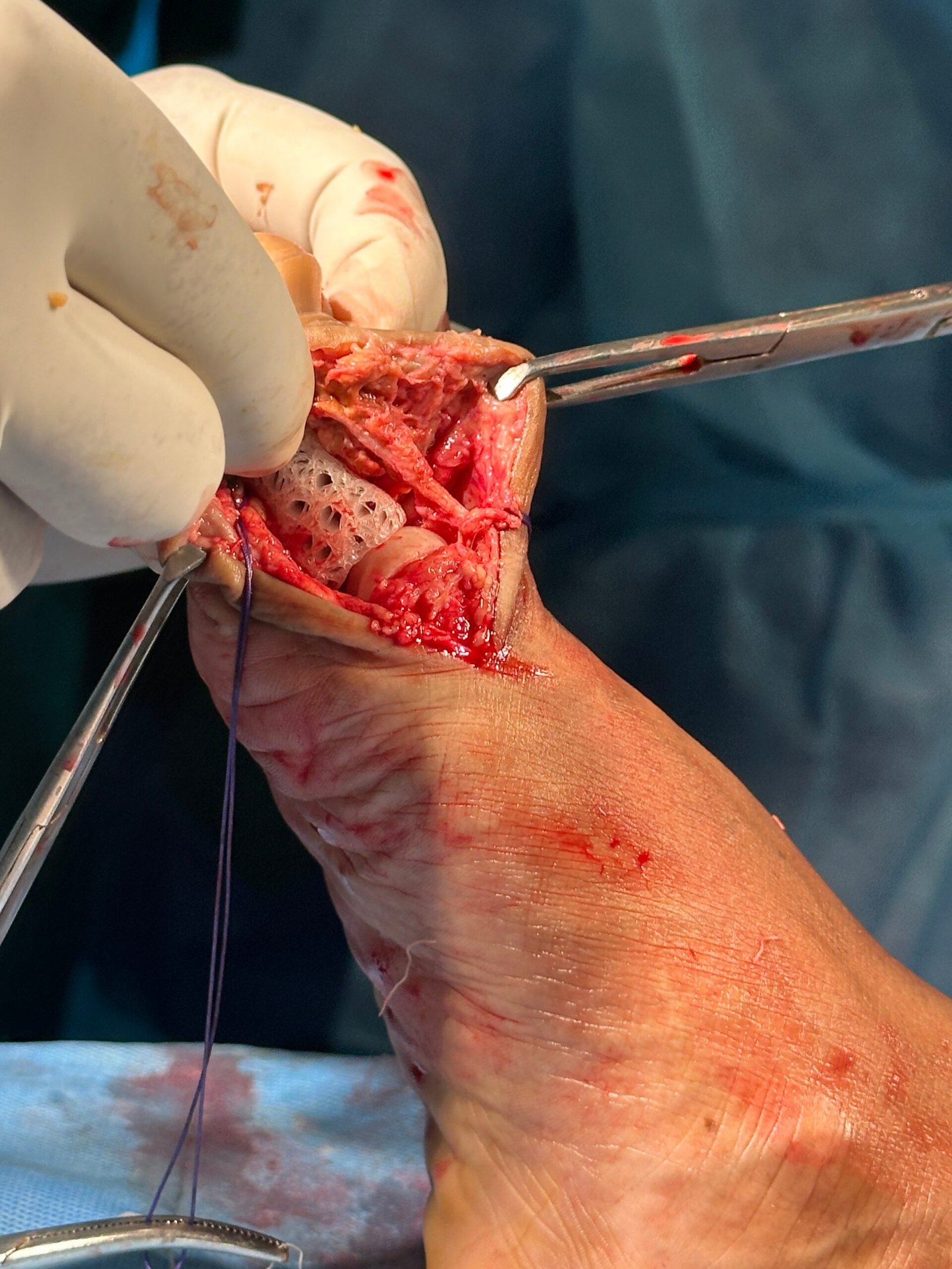
restor3d, a Durham, North Carolina-based leader in personalized 3D-printed orthopaedic solutions, has introduced MyFit by restor3d Digital Suite, a new patient engagement ecosystem built to extend the company’s approach to personalization beyond implant design and into the everyday patient experience. The platform is designed to give patients greater visibility into their orthopaedic journey while creating a more direct connection between patients, their surgical teams, and the long-term clinical outcomes that follow treatment. The launch marks a notable step for a company that has built its reputation on patient-specific, 3D-printed implants, as it now turns its attention to how patients experience the process around that technology, not just the device itself.
restor3d has been expanding rapidly in the personalized orthopaedics space in recent years, including a $38 million funding round that supported the rollout of several new personalized implant lines, and a move to acquire ConforMIS to strengthen its position in patient-specific joint replacement technology. MyFit builds on that momentum by shifting the company’s focus from manufacturing alone to the full patient relationship surrounding each device.
What Is MyFit by restor3d?
MyFit is best understood as a bridge between clinical technology and everyday patient communication. Rather than patients waiting passively for updates from a surgeon’s office, the suite uses automated messaging and a self-service portal to keep them informed at each stage of receiving a personalized, 3D-printed implant. For practices, the goal is to reduce the administrative load that comes with routine status inquiries, freeing staff time while keeping patients engaged and informed. restor3d frames the initiative as part of a broader shift in orthopaedics toward treating personalization as something patients experience directly, rather than a manufacturing detail that happens entirely behind the scenes.
How the Platform Works for Patients
The suite is tailored to different parts of restor3d’s orthopaedic portfolio, with two distinct experiences depending on the procedure. Hip and knee replacement patients are enrolled in MyFit Connect by restor3d, which sends automated text messages as their case moves forward, covering:
- Enrollment confirmation once the personalized implant process begins
- Design updates as the implant is engineered to match the patient’s anatomy
- Manufacturing status as the 3D-printed device is produced
- Notifications as the patient approaches surgery preparation
Shoulder, foot, and ankle patients instead access an interactive patient portal, where they can check on their implant’s status and, for select procedures, view a 3D model of their personalized device ahead of surgery. Notably, portal access requires only basic identifying information rather than a separate password, a design choice intended to lower the barrier for patients who may not regularly use online health tools.
Building Long-Term Clinical Evidence
Beyond communication, MyFit is also designed to support restor3d’s broader data collection efforts. Patients who choose to participate can join the restor3d Patient-Specific Registry, a prospective, longitudinal study that tracks patient-reported outcomes from a baseline measurement through five years following surgery. The registry spans knee, hip, shoulder, and foot and ankle procedures, with an enrollment target of approximately 2,250 patients.
Because outcomes are collected directly from patients through electronic means, restor3d says it can build a growing body of real-world evidence around its patient-specific implants while adding minimal extra administrative work for participating practices. Surgeons who take part can also receive their own patients’ reported outcomes, giving them continued insight into how a device performs long after the operation is complete.
“Personalization has always been at the center of what we do at restor3d.”
— Kurt Jacobus, Chief Executive Officer, restor3d
Why It Matters for the Future of Orthopaedic Care
The launch arrives as digital engagement becomes a growing focus across orthopaedics, with hospitals and device makers increasingly investing in tools that keep patients informed and connected to their care teams outside the operating room. For an industry built around personalized, patient-specific implants, giving patients direct visibility into that personalization is a natural next step rather than a departure from restor3d’s existing strategy.
By pairing automated communication with structured, long-term outcomes tracking, MyFit positions restor3d to gather clinical evidence at scale while strengthening the relationship between patients and their surgical teams. The approach also reflects a wider trend in medical technology, where manufacturers are expected not only to design better devices but to support patients through the full arc of their care, from diagnosis through years of recovery.
As more practices adopt the platform, the real-world data gathered through the Patient-Specific Registry could help shape how personalized 3D-printed orthopaedic implants are refined, validated, and marketed in the years ahead. For patients, it offers something more immediate: a clearer window into a process that has traditionally happened largely out of view.