

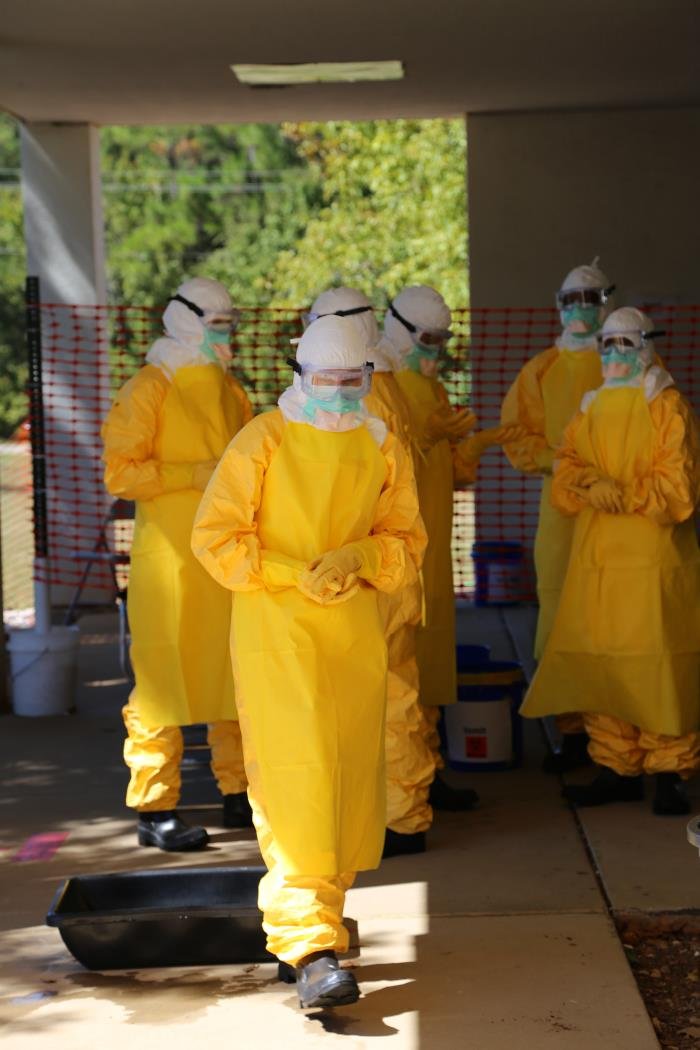
United Nations officials said Tuesday that efforts to curb Ebola in eastern Democratic Republic of Congo are beginning to show results, but stressed the epidemic remains “massive” and will take months to bring fully under control. Speaking at a Geneva press briefing, UN and WHO officials described a patchwork outbreak: improving sharply in some areas while still accelerating in others, making it too early to say the crisis has peaked.
The Numbers Behind the Warning
The outbreak, DR Congo’s 17th recorded Ebola epidemic and already the deadliest in the country’s history, has now recorded 7,258 confirmed cases and 3,510 deaths across seven provinces and 62 health zones, according to government figures published Tuesday. That makes it the second most lethal Ebola outbreak on record globally, trailing only the devastating 2014-2016 West Africa epidemic.
The scale of the crisis has grown rapidly since it was declared in mid-May, driven by the Bundibugyo virus strain, a variant less commonly associated with major outbreaks than the Zaire strain behind most previous DR Congo epidemics. By late August, UN officials said the outbreak was growing “exponentially,” with more than 2,500 deaths recorded in three months, half of them in just the preceding 20 days. At that point, the affected area already covered more territory than France.
This is DR Congo’s 17th recorded Ebola outbreak since the virus was first identified in the country in 1976, near the river from which it takes its name. Previous outbreaks, including a major 2018-2020 epidemic in North Kivu that killed more than 2,200 people, had already established the country as the world’s most experienced responder to the disease. That accumulated expertise has shaped much of the current response, even as this outbreak has outpaced the country’s prior experience in both speed and geographic spread.
A Patchwork of Progress and Growth
Julien Harneis, the UN’s Special Ebola Coordinator, described an outbreak too geographically sprawling to characterize as a single, uniform crisis. In Ituri province, where the outbreak was first detected, the picture has notably improved. Jean-Jacques Muyembe, director of Congo’s National Institute for Biomedical Research, said response teams now have the situation under control there and expressed hope the epidemic could be over in the province by year’s end.
“Here in Ituri, the indicators are turning green, whereas they were previously all red.”
— Jean-Jacques Muyembe, Director, Congo’s National Institute for Biomedical Research
North Kivu tells a different story. Cases there are still climbing fast, particularly in the city of Butembo, where weekly case counts have doubled from roughly 100 to 200. WHO’s Dr. Olivier le Polain, who heads epidemiology and analytics for response within the agency’s Health Emergencies Programme, cautioned that early signs of improvement in an outbreak like this one can reverse quickly, and said it remains too early to confidently declare that a peak has passed.
“It’s too early to confidently say we have passed a peak.”
— Dr. Olivier le Polain, WHO Health Emergencies Programme
Why This Outbreak Has Been So Hard to Contain
Geography and infrastructure have compounded the medical challenge at nearly every turn. Harneis described roads in affected areas as little more than “massive potholes,” where trucks routinely become stuck in mud, while some communities remain reachable only by small aircraft. The outbreak now spans a distance comparable to the gap between Geneva and Dublin, stretching from Bunia in Ituri to Sud-Ubangi at the country’s far end, and response teams have also had to contend with active violence directed against them in parts of the affected region.
Funding gaps have added another layer of strain. The broader $1.3 billion humanitarian response covering the outbreak and its wider impact is currently only 49 percent funded, and UN officials say another $1 billion will likely be needed to sustain the response beyond its first six months. Harneis was blunt about the consequences of underfunding the effort, warning that a resourcing shortfall could allow the virus to resurge in areas where it has already been brought under control.
The Toll Beyond Ebola Itself
UN officials emphasized that Ebola’s damage extends well past its direct death toll. The outbreak has strained the broader health system across affected provinces, contributing to worsening hunger, falling attendance at health centers as communities avoid facilities associated with the outbreak, rising maternal mortality, and interruptions to ongoing treatment for people living with HIV and AIDS. That secondary toll is a familiar pattern from past major Ebola outbreaks, where fear of infection and disrupted health services often end up causing as much harm as the virus itself.
What Happens Next
For now, UN and WHO officials are framing the outbreak’s trajectory in cautiously mixed terms: real, measurable progress in Ituri, but genuine deterioration in North Kivu, layered on top of chronic funding shortfalls and logistical obstacles that have slowed the response since its earliest weeks. Whether the improvements seen in Ituri can be replicated in Butembo and other worsening areas will likely determine how the next several months unfold. As Harneis put it, the epidemic’s sprawling geography means it functions less like a single crisis than like many separate outbreaks unfolding simultaneously, each requiring its own sustained response, resources permitting.